
Issue 44: Eliza Armstrong

TW: CSA
Child sexual assault (mention), abduction
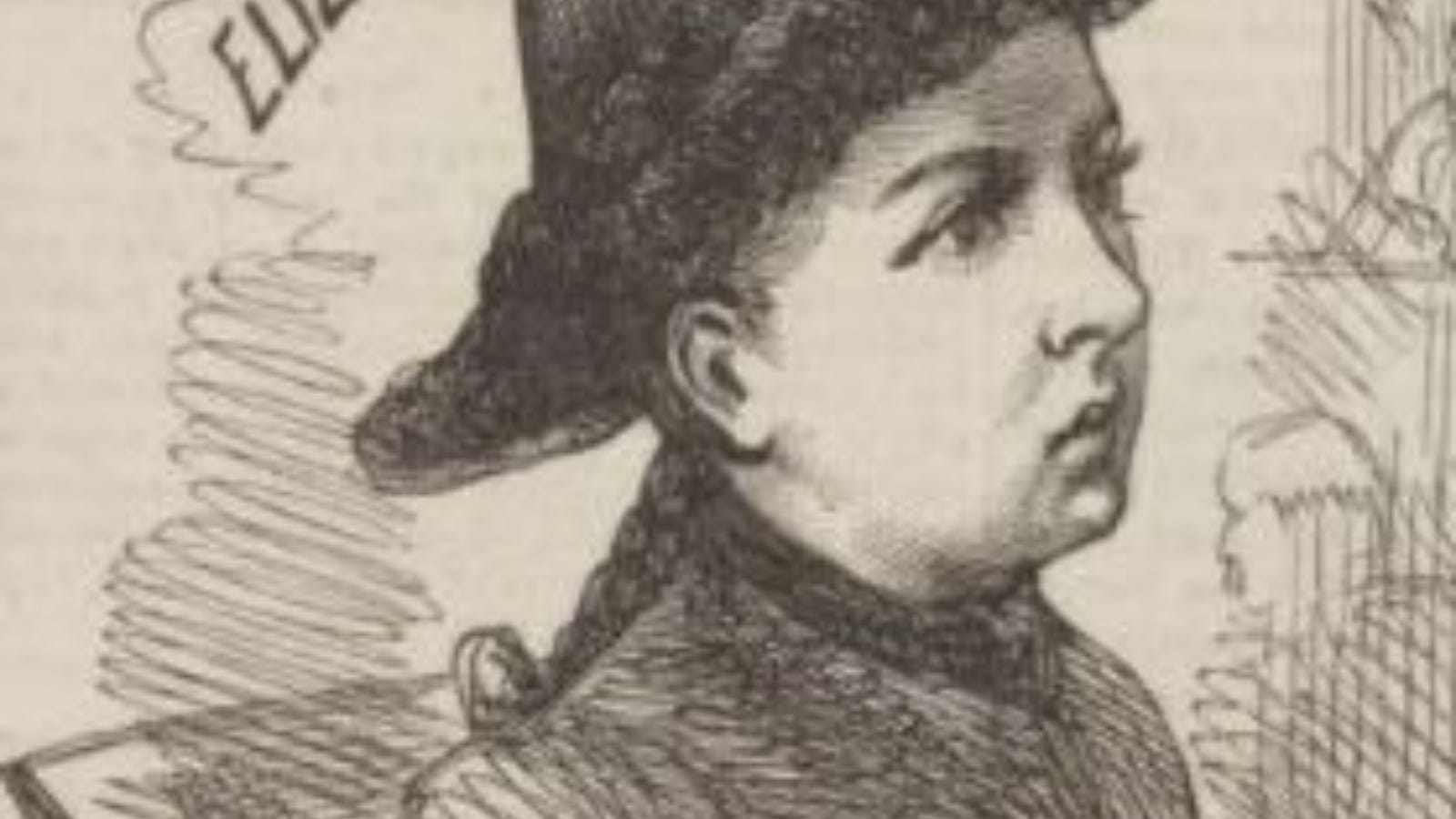
The treatment of women has been a long and ongoing struggle. It has been around since the 19th century, where efforts from early feminists wanted to improve the treatment of women and children in Victorian society. At the same time there was a shift in the social consciousness towards the problem of sex work, and male oppression of women. By the end of the 1870’s there were fears that British women and children were either being lured or abducted into various brothels. For an editor who saw an idea for an investigation for the paper, the expose turned its spotlight elsewhere.
On 22 May 1885, the British parliament had recessed for a bank holiday and Benjamin Scott took the problem straight to someone he thought could help. Scott was an anti-vice campaigner and the Chamberlain if the City of London and wanted to capitalise on the investigative journalism that had been becoming popular in the newspapers.
The editor of the Pall Mall Gazette, William Thomas Stead better known as W. T. Stead was into this type of journalism that would pay the way for the modern tabloid press. He had a flair for the sensational and jumped on the opportunity.
Scott told Stead of the sexually exploited children and that they needed support for the bill that wanted the legal age from 13 to 16, having already successfully raised it 13. Stead agreed to help and began by setting up the ‘Special and Secret Committee of Inquiry’ to investigate child prostitution.
The committee included members from:
the London Committee for the Suppression of the Traffic in British Girls for the Purposes of Continental Prostitution of which Scott was the chairman
Josephine Butler, a feminist and social reformer
The Salvation Army
During the investigation two women posed as sex workers and successfully infiltrated brothels, leaving before they were forced to render sexual services. Butler, with the help of her own son, posing as a brothel-keeper and a procurer, respectively; together they spent a total of £100 buying children in high-class brothels. This was done over a 10 day period.
For his part Stead conducted multiple interviews with people including a former director of criminal investigation at Scotland Yard, active and retired brothel keepers, procurers, sex workers, rescue workers and jail chaplains. He felt however he needed something that would make the point hit home. So under the guise of being for ‘investigative purposes’ he decided to purchase a girl to show that he could do it under the nose of the law.
With the help of Butler and William Booth (of the Salvation Army) he met with a woman by the name of Rebecca Jarrett, who was a reformed sex worker. Understanding the reason why Stead was doing this she agreed to assist him. Together they obtained 13-year old Eliza Armstrong from her mother. Stead had become away of Eliza’s mother’s situation. She was in fact an alcoholic and was in need of some money. When they met with the mother, Elizabeth Armstrong, and made clear what the intentions were. Favouring the drink over her daughter, the mother agreed to sell Eliza for £5 (equivalent to £682.18 in 2023) from the mother the pair took her to a midwife by the name of Louise Mourez before sending her to a London Brothel.
It was then when Stead went undercover, posing as a wealthy businessman he visited the brothel inquiring after Eliza. He specifically asked for the girl drugged before she was brought to him. Instead of taking it any further, Booth and Stead waited for Eliza to come too and scream, before she was wisked away to France by Booth who put the girl in the care of a a Salvation Army family home. Stead had let her scream to make it seem more believable that he did in fact have his way with her.
With the completion of what we might refer to today as an immersive piece, Stead set to work writing up what would be his work that he is remembered for. In total the piece ended up being four parts long and was collectively titled, The Maiden Tribute of Modern Babylon and leaned into sensationalism with some of the crossheads. Crossheads where similar to the pull quotes of the article and where sometimes controversial.
The piece was a hit and in fact helped with the passing of the Criminal Law Amendment Act 1885 which once more raised the age of consent from 13 to 16.
However, as with any investigative piece, even with the support he had - the article would have consequences that Stead had not foreseen. In the articles Eliza had been given the pseudonym of Lily. It had been rival newspapers such as The Times looked into the claims and found out that Stead had posed as the purchaser.
Once this was found out Mrs Armstrong went to the police. She explained that she had not consented to put her daughter into sex work, saying she understood that she would enter domestic service and also that Jarrett did not get the permission of the child's father.
On 2 September charged with the assault and abduction for Eliza Armstrong without the agreement of her parents, Stead, Jarrett, Booth and Louise Mourez and two others were brought into custody.
The trial began on 23 October. Stead decided to defend himself and stated that the girl was procured without the consent of the father and that he had no written evidence of payment to the mother. With only Rebecca Jarrett's word, and was unable to prove Mrs Armstrong's complicity in the crime, he had no other evidence to back up his claims.
Stead, Jarrett and Mourez were found guilty of abduction and procurement. The others were acquitted. Jarrett and Mourez were sentenced to six months in jail and Stead was sentenced to three months.
Though after his sentence was completed he went back to being an editor. However, nothing of what he wrote ever really hit the same tone, nor would bring him any notoriety. He resigned in 1889 from the Pall Mall in order to found the Review of Reviews the following year. In his later life he got interested in spiritualism and died in the sinking of the Titanic.
Eliza on the other hand went on to live a full life. The prosecutor of the case set up a public subscription for the Armstrong family. This could be considered the Victoria era’s GoFundMe, being set up through an advertisement in The Times. The money paid for Eliza to attend Princess Louise Home for the Protection of Young Girls in Wanstead, receiving training to become a servant. Later in her life, she lived in North East England. She started a family and was married twice. She had six children from her first and four children from her second marriage. As late as 1906, she still maintained a friendly correspondence with Stead. She passed away at the age of 66 in 1938.